Are Third-Party Dota 2 Marketplaces Safe?
How to tell a legitimate marketplace from a trap, the scams that target sellers, and the rules that keep your items and money yours.
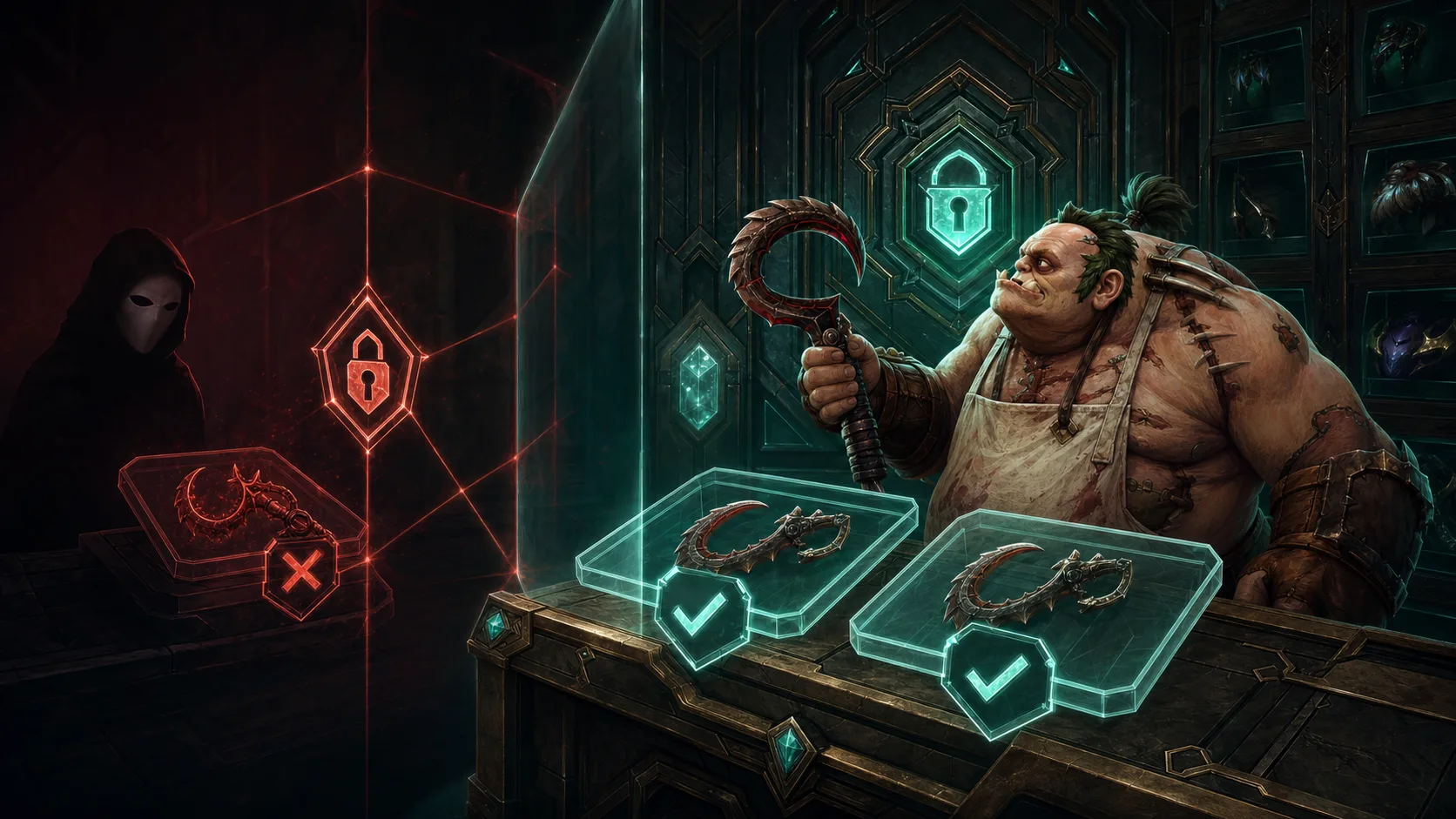
Third-party venues introduce operator, counterparty, account and settlement risk. This guide does not certify any venue, payment route, legality, eligibility, or safety outcome.
Start from an unrated directory
The directory is a navigation aid without claim-level evidence. Verify every operator independently.
What to verify independently
No single checklist proves legitimacy. Review current operator records and terms:
- Operator identity and history from independent records.
- Current user reports treated as anecdotal, not proof of safety.
- Complete transaction terms shown before you commit.
- Current authentication guidance from official platform support; never share credentials or session secrets.
The markets page is unrated and does not claim that listed venues clear a safety bar or that ordering indicates safety.
The scams that target Dota 2 traders
- Imitation venues. Navigate independently and verify the operator before transferring an item.
- Unusually favorable offers. Compare the exact terms and do not infer legitimacy from price.
- Unverified intermediaries. Do not transfer custody on an unsupported trust claim.
- Credential prompts. Stop if a counterparty asks for login or session secrets.
- Secret-token requests. Treat every authentication or recovery token as sensitive.
- Unverified settlement. This guide does not establish payment finality or recovery rights.
The rules that keep you safe
- Never share credentials or session secrets.
- Follow current official account-security guidance.
- Review the exact confirmation through the platform's supported flow.
- Sanity-check every price against the dated saved snapshot and exact venue listing.
- Test small before trusting any new marketplace with valuable items.
These steps reduce some common risks but cannot make a venue or transaction safe. Consult current official security guidance and the general checklist in how to trade Dota 2 items safely.